
Why More Megapixels Can Make Machine Vision Worse
Why More Megapixels Can Make Machine Vision Worse
More megapixels do not always mean better machine vision.
When selecting an industrial camera, resolution is often the first specification engineers look at. A 20MP camera appears to be a natural upgrade from a 5MP camera, and a 65MP camera seems even better.
But in real machine vision applications, simply increasing megapixels can sometimes make the overall system more difficult to design.
Higher resolution can mean more image data, higher bandwidth requirements, greater processing loads, lower frame rates, more demanding lens requirements, and higher system costs.
The better question is therefore not: “What is the highest-resolution industrial camera available?” but: “How much image information does this inspection actually require?”
This article explains why more megapixels can sometimes work against a machine vision system—and how to choose an industrial camera based on the actual inspection task.
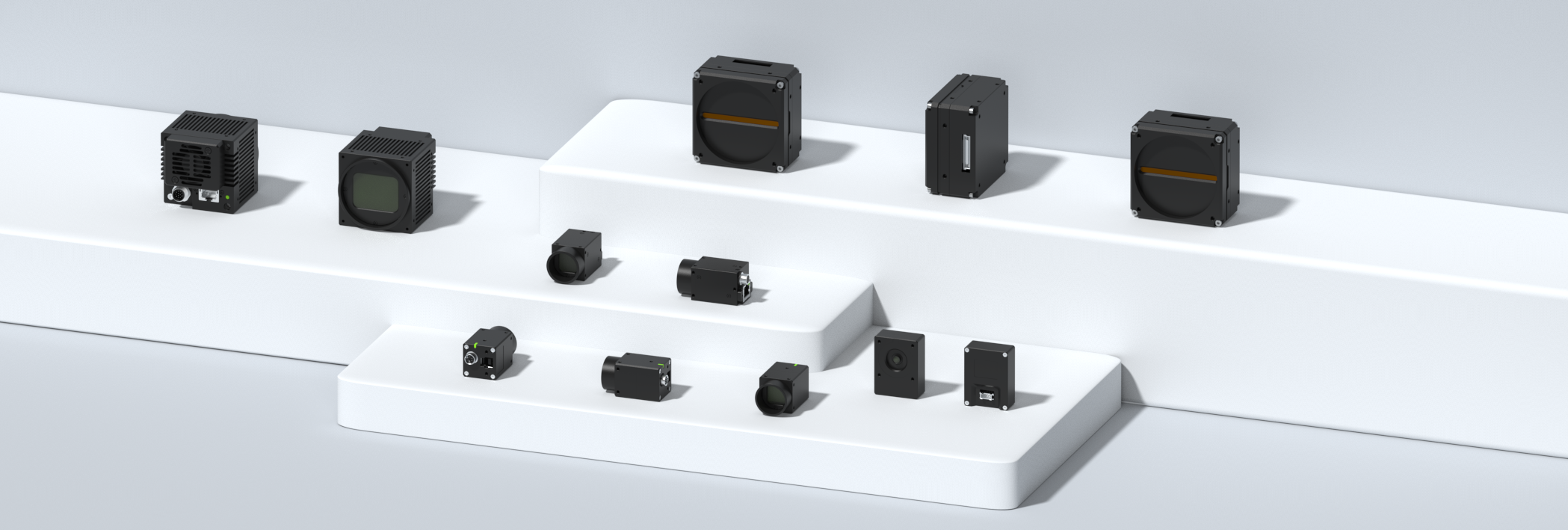
1. More Pixels Means More Data—Not Automatically More Useful Information
A high-resolution sensor captures more pixels. That sounds simple, but every additional pixel becomes part of the image data that needs to be transferred, processed, stored, and analyzed.
For example, if an inspection system moves from a 5MP camera to a much higher-resolution camera, the system may need to handle substantially more data for every frame.
This creates several possible bottlenecks:
Higher resolution → Larger image data → Higher transmission bandwidth → Higher CPU/GPU or processing requirements → Potentially lower system efficiency
This is particularly important for high-speed machine vision. If the production line is moving quickly, the system may benefit more from a camera that provides sufficient resolution at a high frame rate than from a camera with extreme resolution but insufficient speed.
2. High Resolution Can Become a Lens Problem
An industrial camera does not work alone. The final image depends on the complete optical system:
Sensor + Lens + Lighting + Exposure + Camera
A high-resolution sensor can only provide useful additional detail if the lens can resolve that detail. This means that upgrading from a lower-resolution camera to a very high-resolution camera may require upgrading the lens as well. Otherwise, the additional pixels may not translate into additional useful information.
This leads to an important principle: The resolution of the camera should match the optical resolution of the lens and the actual inspection requirement.
For precision inspection, simply buying a higher-megapixel camera without evaluating the lens is not an effective upgrade strategy.
3. Pixel Size Matters More Than Many Buyers Expect
Two cameras can have similar megapixel counts but different pixel sizes. Pixel size affects how the sensor receives light and can influence imaging performance in different application environments.
For example, MindVision's GigE area scan camera portfolio includes products with different pixel sizes and sensor formats. The product selection table covers cameras ranging from compact lower-resolution models to higher-resolution models, with pixel sizes including approximately 2.2 μm, 2.9 μm, 3.0 μm, 3.45 μm, 4.0 μm, 4.5 μm and larger options.
This illustrates why resolution should not be evaluated independently. A practical camera selection process should consider:
- Resolution
- Pixel size
- Sensor size
- Field of view
- Lens
- Working distance
- Lighting
- Frame rate
together.
4. When High Resolution Becomes a Frame Rate Problem
For a moving target, frame rate can be more important than maximum resolution. Consider a production line where products are continuously moving. If the camera cannot capture enough frames during the movement, increasing resolution will not necessarily improve inspection.
MindVision's GigE camera portfolio demonstrates this trade-off across different products. For example, its GigE area scan range includes:
- MV-GE31GC/M — 0.3MP, up to 108.25 fps
- MV-GE33GC/M — 0.3MP, up to 160 fps
- MV-GE34GC/M — 0.3MP, up to 388 fps
- MV-GE40GC/M — 0.4MP, up to 299 fps
- MV-GE231GC/M — 2.3MP, up to 40.25 fps
- MV-GE300GC/M — 3MP, up to 38 fps
- MV-GE500C/M — 5MP, up to 15.25 fps
- MV-GE501GC/M — 5MP, up to 24 fps
The point is not that a lower-resolution camera is always better. The point is: Different inspection speeds require different combinations of resolution and frame rate.
5. Global Shutter Can Matter More Than Megapixels
When objects move, shutter type becomes an important consideration. A high-resolution rolling shutter camera may provide plenty of pixels, but moving objects can still suffer from image distortion depending on the application.
For high-speed inspection, a global shutter camera can be a more appropriate choice. MindVision's GigE area scan camera portfolio includes many global shutter models, including models based on sensors such as IMX287, IMX249, IMX265 and other sensors.
Therefore, if the inspection target is moving, the selection process should not stop at: “How many megapixels?” It should also ask: “What shutter type do I need?”
6. More Pixels Also Means More Bandwidth
This is where camera interface becomes important. A high-resolution camera generates a large amount of image data. If the interface cannot handle the required data rate, the system architecture itself becomes the bottleneck.
MindVision provides multiple industrial camera interfaces, including:
- GigE
- USB3.0
- 2.5GigE
- 10GigE
- Fiber
- CoaXPress
- PCIe
The 2026 product portfolio specifically includes GigE area scan and line scan cameras, 2.5GigE cameras, 10GigE area scan and line scan cameras, as well as CoaXPress cameras. For GigE area scan cameras, MindVision supports up to 100-meter stable transmission and multi-camera networking, while hardware image processing acceleration can help reduce host CPU usage.
For even larger data volumes, higher-bandwidth interfaces become useful. MindVision's CoaXPress camera platform, for example, provides an effective bandwidth of up to 4850 MByte/s, while supporting CoaXPress 2.1 and flexible 1-, 2-, and 4-channel configurations.
7. High Resolution Is Valuable When the Application Actually Needs It
The goal of this article is not to argue against high-resolution cameras. High resolution is extremely valuable for applications that genuinely require large amounts of spatial information. Typical examples include:
- Large-format display inspection
- Semiconductor inspection
- PCB inspection
- Precision surface inspection
- Scientific imaging
- Large-area measurement
- High-detail industrial inspection
MindVision's product portfolio includes cameras specifically designed for these demanding applications. One example is the MV-PX41000C/M, a 410-megapixel PCIe interface industrial camera. It provides a resolution of up to 24592 × 16704, supports 8 fps full-frame acquisition, uses CoaXPress 2.1, and incorporates TEC plus water cooling to maintain camera temperature stability and reduce image noise.
This is an excellent example of when extreme resolution makes sense: the application requires it, and the complete system is designed to support it.
8. Sometimes the Right Answer Is a Line Scan Camera
One of the most overlooked points in camera selection is that some continuous-material inspection applications are better suited to line scan cameras. For applications involving:
- Film
- Paper
- Metal
- Glass
- Web materials
- Continuous production lines
a line scan camera can continuously capture the material line by line.
Instead of asking: “How many megapixels does the area scan camera have?” the more appropriate questions may be:
- What line rate is required?
- What pixel size is appropriate?
- What material speed must be supported?
- What interface bandwidth is required?
- Is TDI necessary?
MindVision offers GigE, 10GigE and high-speed line scan solutions. Its 10GigE line scan portfolio includes general models as well as a 256 TDI series, with 5 μm pixels, 10GigE interface and sensor line rates up to 250 kHz/200 kHz depending on configuration. The 256-stage TDI design can reduce the demand for illumination in suitable applications.
This is a good example of why camera selection should begin with the inspection method, not the megapixel number.
9. The Best Camera Is the One That Matches the Entire System
A practical machine vision system can be viewed as:
Inspection Requirement → Field of View → Required Spatial Resolution → Sensor → Lens → Lighting → Frame Rate → Shutter → Interface → Processing Platform → Final Camera Selection
This process is more reliable than starting with a camera catalog and simply selecting the highest megapixel model.
10. How to Choose the Right Resolution
A simple decision framework can help.
| Application requirement | Priority | Camera direction |
|---|---|---|
| Small defect detection | Spatial resolution | High-resolution area scan |
| High-speed inspection | Frame rate | Global shutter high-speed camera |
| Large-area precision inspection | Resolution + FOV | High-resolution camera |
| Continuous material inspection | Line rate | Line scan camera |
| Multi-camera factory system | Bandwidth + stability | GigE / 10GigE |
| Extremely high data volume | Transmission bandwidth | CoaXPress / Fiber / PCIe |
| Specialized spectral inspection | Spectral response | SWIR / UV |
| Limited installation space | Camera structure | Board / Mini / 90° camera |
11. MindVision: From Standard Cameras to High-Performance Vision Systems
MindVision's product portfolio is designed around different machine vision requirements rather than a single resolution strategy. Its current product portfolio includes:
- GigE area scan cameras
- GigE line scan cameras
- 2.5GigE cameras
- 10GigE area scan cameras
- 10GigE line scan cameras
- USB3.0 cameras
- CoaXPress cameras
- Fiber optic cameras
- PCIe interface cameras
- SWIR cameras
- UV cameras
- Thermal imaging cameras
- Smart cameras
- 3D cameras
- Board cameras and modules
- Special-structure cameras
- OEM/ODM customization
The 2026 product brochure describes MindVision's positioning around high integration, performance, cost-effectiveness, rich interfaces, flexible customization and service.
More importantly, MindVision can customize cameras across different sensor brands and specifications, including Sony, ON Semiconductor, OmniVision, Gpixel and SmartSens, as well as different interfaces and spectral bands. This gives machine vision integrators more flexibility when a standard camera does not completely match the application.
Conclusion: Don't Buy More Pixels Than Your Application Needs
The purpose of an industrial camera is not to produce the largest image file. Its purpose is to provide the right visual information for the inspection task.
A 5MP camera can be better than a 20MP camera when the application requires higher frame rate, simpler data transmission, lower processing requirements, or a more cost-effective system. Conversely, a 20MP, 65MP, or even 410MP camera can be the right choice when the application genuinely requires extremely high spatial resolution.
The key is not: “How many megapixels does the camera have?” The better question is: “What does my machine vision system actually need to see?”
MindVision provides industrial camera solutions covering different resolutions, sensor technologies, interfaces, imaging methods and application requirements—from GigE and USB3.0 cameras to 10GigE, CoaXPress, high-resolution PCIe cameras, line scan, SWIR, UV and other specialized imaging solutions. By selecting the camera based on the inspection task rather than simply chasing megapixels, manufacturers can build machine vision systems that are more balanced in image quality, speed, reliability, integration and total cost.
Email: globalmarket@mindvision.com.cn
Website: https://www.mindvision.ltd
#MindVision
MindVision Technology Co., Ltd. is a professional domestic industrial camera manufacturer headquartered in Shenzhen, with production centers and R&D bases in Changsha (Hunan) and Wuxi (Jiangsu), employing nearly 300 people. Its product portfolio covers area-scan cameras, line-scan cameras, thermal imaging cameras, and stereo camera modules, with over 100 patents and software copyrights. The company is ISO9001 certified.
For more information or free selection consulting, please visit MindVision’s official website or contact the sales team.
We’ll be glad to help you
Please Login
Full Name
Company Name
E-mail*
Country / Region
Your Needs / Application*
Verification code

Get in touch
Name*
E-mail*
Country*
Your Needs / Application*
